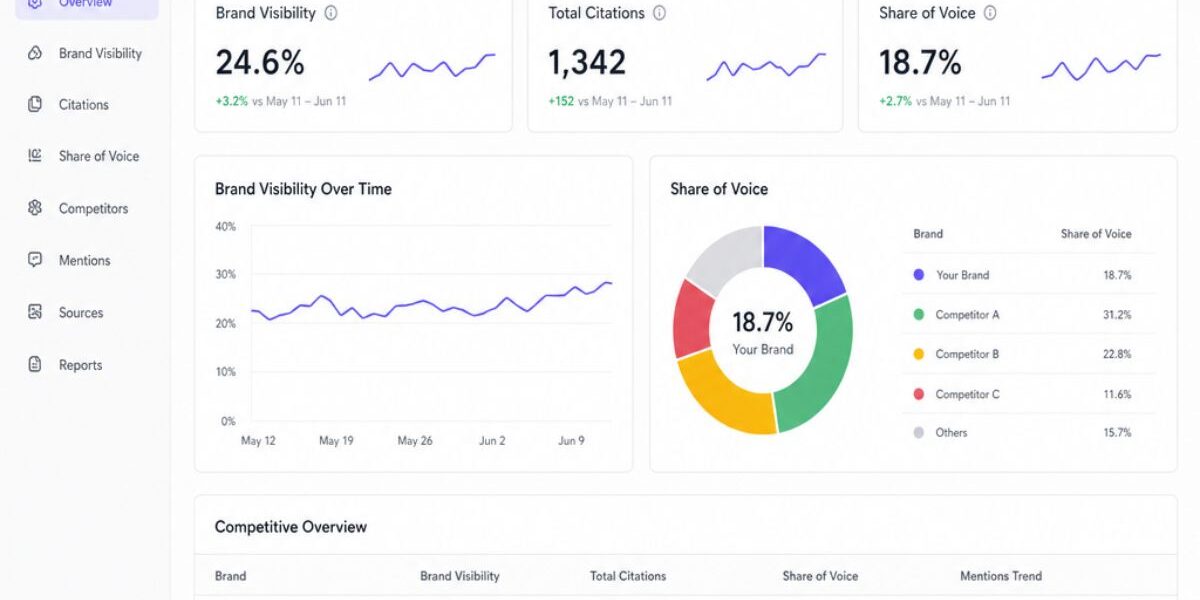



Referrals slowing down. Competitors appearing first in search. Website traffic that never becomes a consultation, appointment, or qualified call.
You can be excellent at what you do and still be difficult to find.
That is the invisible race facing today’s law firms, medical practices, financial advisors, CPAs, and other professional services organizations. Your prospective clients are searching for help every day. They are comparing providers, reading reviews, checking credentials, and deciding whom to contact before you ever know they are in the market.
If your firm is not visible at that moment, your reputation may never enter the conversation.
The solution is not one isolated marketing tactic. It is a coordinated growth system built around three services:
- SEO and search visibility
- Paid advertising and Ads
- A broader digital strategy that connects everything
When those services operate on top of a secure, reliable IT foundation, your firm gains more than traffic. You gain predictable opportunities, better measurement, and single-vendor accountability.
The Problem: Great Firms Are Becoming Digitally Invisible
You may recognize the scenario.
“Hey Margaret, do we know anyone who handles this type of case?”
“I got a guy who can update the website.”
“Let’s just boost a few posts and see what happens.”
These temporary fixes are common. They are also expensive when viewed over time.
A website gets redesigned but never optimized. An ad campaign runs without proper conversion tracking. A marketing vendor publishes content without understanding your professional obligations. A review request process collects information through tools that were never evaluated for privacy or security.
The firm spends money. The partners remain uncertain. New business continues going to the competitor who happens to appear first.
Your digital presence is not a brochure. It is part of your business development infrastructure.
Why Search Visibility Matters More Than a Number-One Ranking
Modern search is not limited to traditional organic results. Prospective clients may find you through:
- Google Search
- Google Maps and the Local Pack
- Local directories and industry listings
- Reviews and reputation platforms
- AI-generated answers and recommendations
- Paid search results
- Mobile and voice searches
The objective is not simply to rank first for a broad keyword. The objective is to appear consistently across the places where your ideal clients are making decisions.
A personal injury law firm needs to be visible for relevant practice-area and location searches. A medical practice needs to be easy to find when patients search for a specific provider or treatment nearby. A financial advisor needs a digital presence that communicates expertise, trust, and professional discipline before a prospect schedules a meeting.
That requires a strategy built around relevance, authority, trust, and conversion.
Our SEO search visibility services are designed to support that broader objective.
Service One: SEO That Captures High-Intent Searches
SEO is the long-term foundation of digital visibility. It helps search engines understand what your firm does, who you serve, where you operate, and why your organization is credible.
In plain language: SEO helps the right people find you without requiring you to pay for every click.
What effective SEO includes
-
Technical site health
Your website must be fast, mobile-friendly, secure, and easy for search engines to crawl. Broken links, confusing navigation, slow pages, and indexing problems can undermine even excellent content.
-
Service-specific pages
A generic “Services” page is rarely enough. Build dedicated pages for each important practice area, specialty, or financial service.
Examples might include:
- Estate planning attorney in Atlanta
- Orthopedic consultation in Fayetteville
- Fiduciary financial advisor for retirement planning
- HIPAA-compliant healthcare technology services
-
Location-focused content
If you serve multiple offices or communities, each location should have accurate, useful information. Avoid thin pages that simply swap out city names. Include office details, service areas, directions, local context, and relevant calls to action.
-
Google Business Profile optimization
Your profile is often a prospect’s first impression. Categories, hours, photos, services, phone numbers, and reviews should be complete and consistent.
-
Helpful authority-building content
Create answers to the questions your clients ask before they call. Explain processes. Clarify risks. Define terminology. Address common concerns.
This supports search visibility while demonstrating expertise and building trust.
-
Measurement and refinement
Track more than rankings. Look at qualified calls, consultation requests, appointment forms, engagement with service pages, and the sources producing real opportunities.
SEO takes time. That is a disadvantage if you need immediate visibility. It is also an advantage because the value of a strong page, useful guide, or optimized local profile can compound over time.
For additional perspective, the D.C. Bar’s SEO fundamentals for lawyers reinforces the importance of treating search optimization as a structured professional practice rather than a collection of shortcuts.

Service Two: Paid Advertising for Immediate Visibility
SEO is an investment that compounds. Paid advertising creates visibility now.
When someone searches for “family lawyer near me,” “new patient medical practice,” or “financial planner for business owners,” Ads can place your firm in front of that person while they are actively considering their options.
That immediacy is valuable. But paid advertising is not a license to spend without discipline.
A responsible Ads program should include:
- Tightly defined services and locations
- High-intent keyword targeting
- Separate campaigns for different practice areas
- Landing pages that match the ad message
- Call and form tracking
- Negative keyword management
- Ongoing testing and optimization
- Clear cost-per-lead and cost-per-qualified-consult reporting
The goal is not to generate the most clicks. It is to generate the right conversations at a sustainable cost.
Pros and cons of paid advertising
Pros
- Faster visibility than SEO
- Precise geographic targeting
- Flexible budgets
- Useful data about search behavior
- Ability to promote priority services immediately
Cons
- Traffic generally stops when spending stops
- Competitive industries can have high click costs
- Poor landing pages waste budget
- Tracking can create privacy and compliance concerns
- Unqualified leads can make performance appear better than it is
Paid advertising works best when it supports SEO rather than replacing it. The search terms that produce qualified leads through Ads can inform your content strategy. The pages that perform well organically can improve your paid landing pages.
That is the power of connecting the channels.
Service Three: A Digital Strategy That Prevents Fragmentation
SEO and Ads are tools. Digital strategy is the operating model that tells you how to use them.
Without an overall strategy, professional firms often end up with disconnected activity:
- A website vendor managing the site
- An SEO company publishing content
- An advertising contractor buying clicks
- An internal employee posting on social media
- An IT provider securing the environment
- No single person accountable for the result
That is how “I got a guy” becomes a business process.
A complete digital strategy should align:
-
Business goals
Are you trying to attract higher-value cases, fill appointment capacity, expand into a new market, or grow a specific practice area? -
Target audiences
Who are you trying to reach? What problems are they experiencing? What questions do they ask before contacting you? -
Positioning and messaging
Does your website communicate your expertise in a clear, credible, and differentiated way? -
Website experience
Can someone quickly understand what you do, trust your firm, and take the next step? -
SEO and content
Are you building visibility around meaningful services and locations? -
Paid acquisition
Are Ads focused on profitable opportunities with measurable outcomes? -
Reputation management
Are reviews, testimonials, credentials, and directory listings accurate and professionally managed? -
Reporting and accountability
Can leadership see what is working, what is not, and what should happen next?

Compliance-Aware Marketing Is Not Optional
Marketing for a regulated or high-trust professional firm requires more than persuasive copy.
It requires controls.
For law firms, advertising may need to account for state bar rules, confidentiality obligations, testimonial restrictions, and disclaimers regarding past results.
For medical practices, campaigns must be designed carefully around HIPAA, protected health information, platform policies, patient privacy, and medical advertising standards.
For financial advisors, marketing may involve SEC, FINRA, fiduciary, performance, testimonial, disclosure, and recordkeeping requirements.
The details vary. The principle is consistent: your marketing should not create a security, privacy, or regulatory problem while trying to create a business opportunity.
That means you should evaluate:
- What information your forms collect
- Where lead data is stored
- Who has access to submissions
- Which tracking pixels and analytics tools are installed
- Whether your website and plugins are maintained securely
- How testimonials and reviews are approved
- Whether required disclosures are retained and reviewed
This is where an IT and cybersecurity partner can provide meaningful value. Marketing should be built on the same foundation as the rest of your business: secure identities, managed devices, protected cloud systems, reliable backups, and documented processes.
Why Single-Vendor Accountability Creates an Advantage
Your marketing agency may not know your security posture. Your IT provider may not understand your growth targets. When these functions are completely disconnected, you become the project manager between vendors.
That creates delays, duplicated costs, and uncertainty about who owns the outcome.
A partner that understands both technology and digital growth can help you:
- Protect website administration and marketing accounts
- Review third-party tools before they are deployed
- Limit unnecessary access to sensitive systems
- Design secure lead intake workflows
- Align campaigns with compliance requirements
- Connect website performance to business reporting
- Reduce vendor handoffs and communication gaps
At A PC of Mind, digital growth is designed to complement the secure foundation provided by managed IT services and cybersecurity services.
The result is not merely more marketing activity. It is a more controlled, measurable, and reliable growth engine.

A Practical 90-Day Starting Plan
You do not need to overhaul everything at once.
Begin with a disciplined sequence:
-
Audit your current visibility
Review your website, Google Business Profile, local listings, rankings, reviews, analytics, and conversion paths. -
Choose your highest-value opportunities
Identify the three to five services, specialties, or locations most important to your growth goals. -
Repair the foundation
Address technical SEO, website security, mobile performance, inaccurate listings, and unclear calls to action. -
Build priority service pages
Create useful, authoritative pages for the searches your ideal clients are most likely to make. -
Launch focused Ads
Start with tightly controlled campaigns for priority services and locations. Measure qualified opportunities, not just clicks. -
Establish a review and content process
Publish helpful content and request reviews through compliant, repeatable workflows. -
Review performance monthly
Compare visibility, lead quality, cost per opportunity, and conversion rates. Then refine the plan.
Final Word: Be Findable, Trustworthy, and Ready
Your competitors are not necessarily better than you.
They may simply be easier to find.
The invisible race for new business is won by firms that connect expertise with visibility, visibility with trust, and trust with a clear next step. SEO helps you build durable search presence. Ads help you capture immediate demand. Digital strategy ensures both investments support the same business objectives.
For law firms, medical practices, financial advisors, and other professional services organizations, that strategy must also respect privacy, security, and compliance.
You should not have to coordinate five vendors to protect your systems and grow your firm. A single accountable partner can help you create the secure, measurable, professional digital presence your business deserves.
Explore A PC of Mind’s digital growth services or schedule a conversation about building a stronger foundation for your next stage of growth.